
Loading...
Investigation System
November 18, 2026 at 10:13 AM
Added a screenshot from the store gallery (2026-11-18)
The investigation system is a detective-style mechanic that Owlcat Games built specifically for Warhammer 40,000: Dark Heresy and describes as one of the game's core features. It is integrated into the story: players face many cases, from minor ones to critical cases with consequences for the whole sector. Owlcat introduced the system in a December 2, 2025 deep dive with designer Georgii Doronin, one of its authors.
Collecting evidence is the heart of every case. Clues range from a bloodied bolter or a burnt ledger fragment to traces of an unknown substance or a sigil on a wall. Some leads send the acolyte off course, some are too dangerous to follow, and witnesses may lie. Some clues need specialist skills before they reveal themselves. Activities Owlcat has described include:
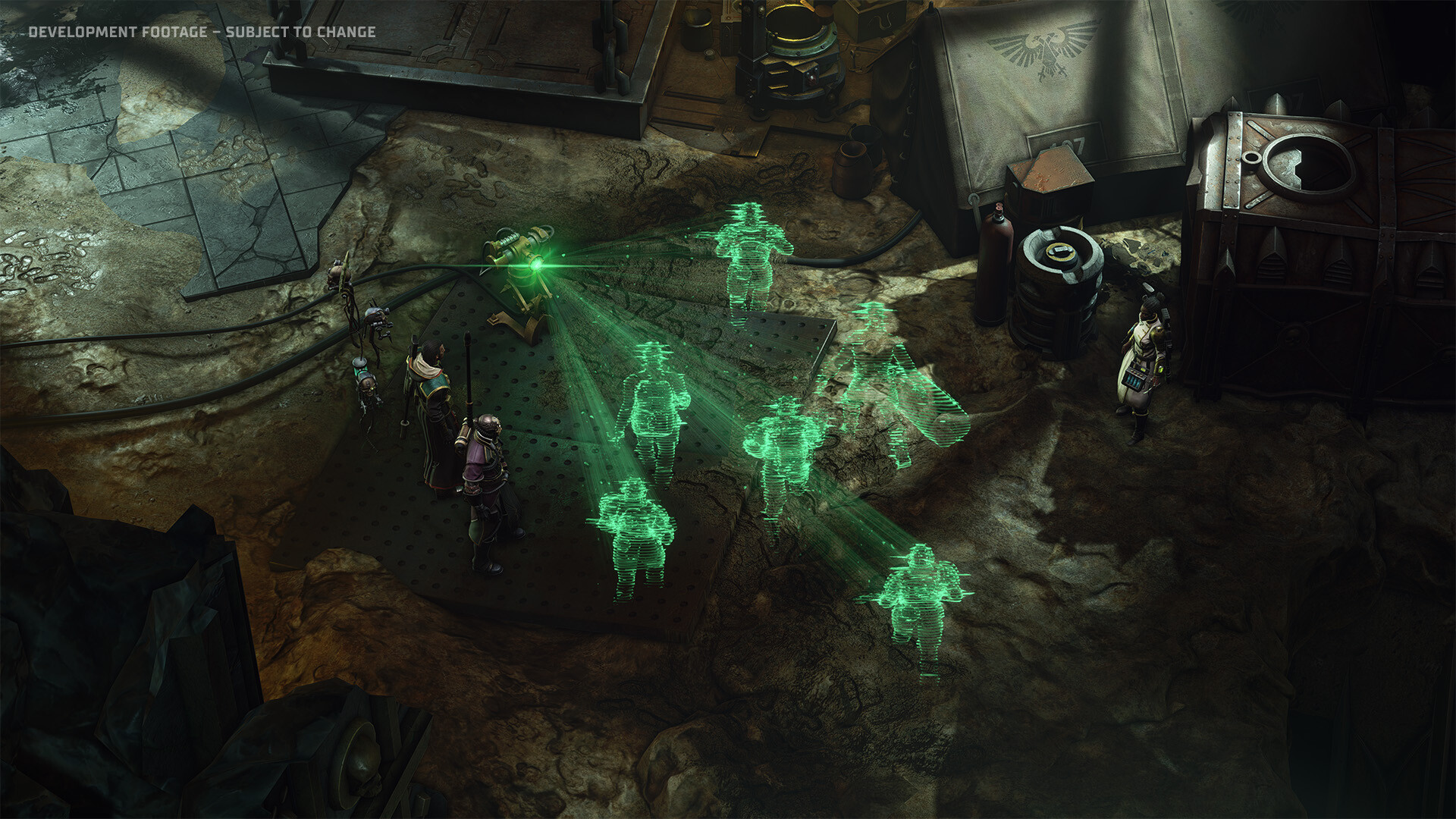
Using a terrain analyser to find what is not visible at first glance.
Tracking a target by their footprints.
Identifying informants or suspects by their appearance.
Reconstructing the sequence of events from the information gathered.
Interviewing witnesses.
The Inquisition equips the acolyte with multiple servo-skulls, each with its own abilities. Functions Owlcat has named include lighting the way with lumens, Auspex scans, speech synthesis, pict recordings, analysing substances and detecting psykana.
A dedicated detective journal gives each case its own workspace, storing collected clues, connections, data and conclusions across separate tabs. The same clue can point to several different answers. In the beta, contradictions are highlighted in orange; Owlcat notes that conflicting evidence is not always wrong evidence. Development footage shows an Investigation Journal tab alongside the inventory, character, journal and reputation screens.
Each companion is a specialist in their own field and may offer insights into clues or a fresh opinion. In the beta, players can swap companions in the middle of a mission to apply their specialist knowledge.
A case ends with the acolyte's report to their Inquisitor, summarising what they found, their deeds and failures, and whom they hold guilty. Reports do not have to be truthful. An acolyte can reach a wrong conclusion through missing information, or deliberately blame an innocent person as punishment or out of personal animosity. Owlcat separates the literal truth of what happened from whom the player chooses to blame, and says both have consequences. The game's creed, "Innocence proves nothing", runs through this system.
The closed beta includes a full investigation. As an acolyte of the Tyrantine Cabal, the player chases the mystery of the Tyrant Star and investigates the presence of heretic Astartes. See Alpha and Beta Testing.