

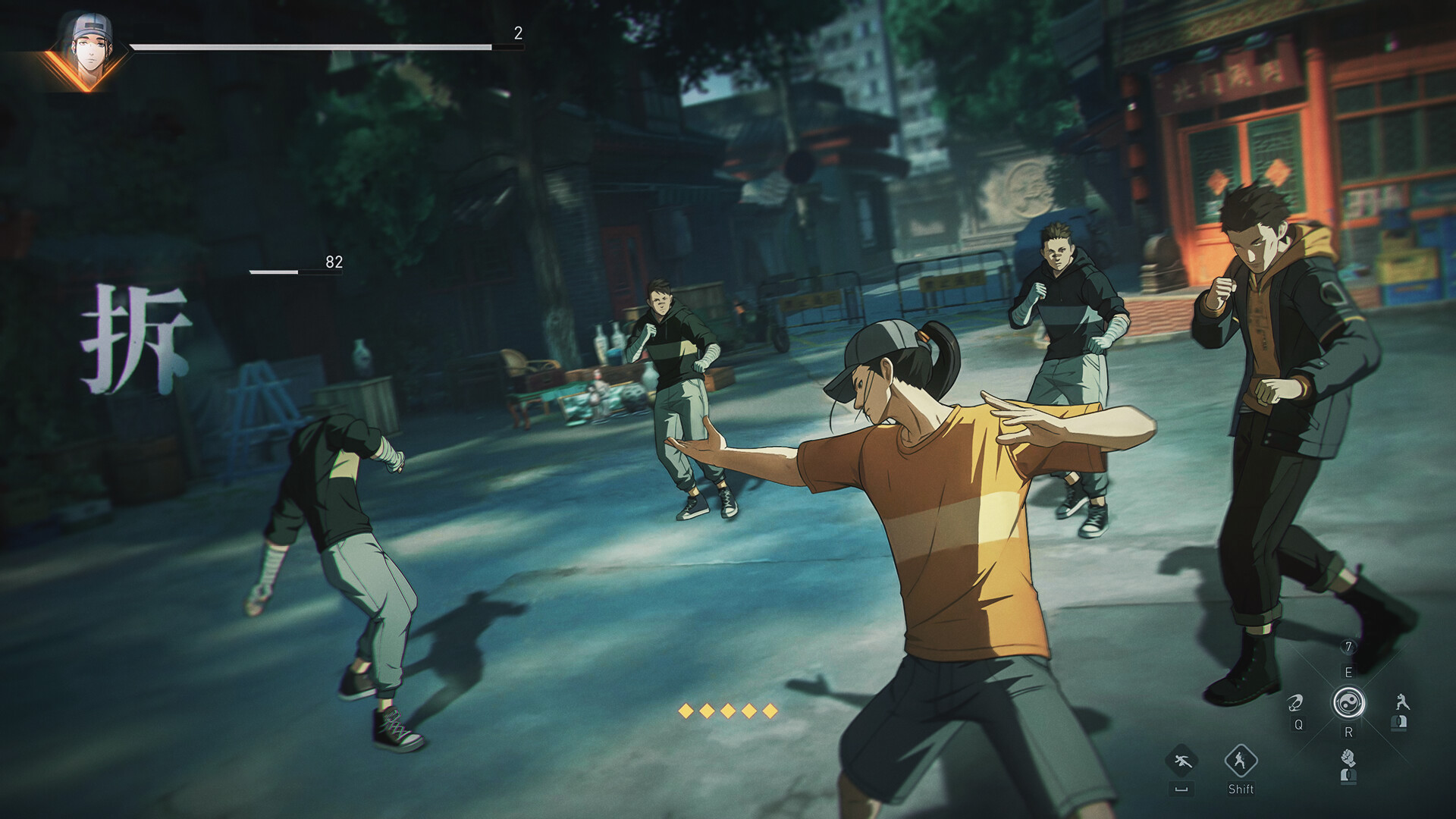
Combat in The Hidden Ones is built on four core components: basic attack, skills, block, and dodge. It is designed as a skill-based fighting game rather than a button-masher, where the moment-to-moment loop is reading an opponent's attack patterns, managing stamina, and reacting with well-timed defense. Once you learn the controls and the flow of a fight, the system opens up into long, expressive exchanges. This page covers how those pillars fit together; for the defensive resource that ties them all together, see Stamina and Defense.
The Four Pillars
Every fight comes back to the same four actions. Basic attacks and skills are your offense, while block and dodge are your defense. Learning when to switch between them, rather than mashing one button, is what the game rewards.
Pillar | Role | Notes |
|---|---|---|
Basic Attack | Core offense | Chains into combos; also breaks an enemy block and grapples them |
Skills | Special offense | Each fighter has signature abilities; skills can branch into combos |
Block | Defense | Holds against blockable attacks and costs no stamina |
Dodge | Defense | Evades attacks, including unblockable ones, but drains stamina |
Because the system leans on timing rather than raw button speed, fights tend to feel deliberate. Press hands-on impressions compared the flow to a methodical brawler with the added flair of supernatural powers layered on top.
Reading Attacks
The defining feature of combat is its color-coded attack tells. Every incoming attack is signposted by a color so the player knows how to respond before it lands. Learning to read these cues on reflex is the single most important skill, and it is what separates a clean defense from a punished one.
Cue | Meaning | Response |
|---|---|---|
Blue glow on the enemy | The attack can be blocked | Block, or parry for a counter opening |
Red flash on the enemy | The attack is unblockable | Dodge; it cannot be blocked or parried |
Yellow bar near the center of the screen | The parry window is open | Time a parry to interrupt and create an opening |
White shield aura in front of the enemy | The enemy is blocking | Use a basic attack to break the block and grapple |
The blue and red cues are the foundation. A blue glow tells you the hit is blockable, so you can hold guard or attempt a parry. A red flash means the attack is unblockable, and your only safe option is to dodge it. As shown so far, these tells appear on the attacking character so you can react to each strike individually.
Breaking a Guard
When an enemy turtles up, they show a glowing white shield aura in front of their character. A standing block will stop your normal hits, so you cannot simply attack through it. Instead, a basic attack against a blocking enemy breaks the block and grapples the opponent, which opens them up for skills and combo follow-ups. In other words, basic attacks double as your guard-break and grab tool, giving offense a built-in answer to a defensive opponent.
This creates a rock-paper-scissors layer on top of the color cues: the attacker pressures, the defender blocks, and the attacker uses a grab to crack the guard, while the defender can dodge or parry instead of holding block. None of it relies on memorizing long inputs; it relies on reading the situation.
Move Vocabulary
Hands-on coverage describes a consistent vocabulary of actions that every fighter shares, even though their individual movesets differ. The table below summarizes the moves shown in previews and test builds. Exact per-character command inputs and full movelists have not been published, so this list describes the categories of moves rather than specific button sequences.
Move | What It Does |
|---|---|
Combos | Chains of basic attacks; completing a combo shoves enemies away |
Skills | Signature special moves that can flow into combos |
Parries and counters | Time a guard to interrupt an attack and punish |
Guard-breaking grabs | A basic attack that cracks a blocking enemy and grapples |
Break-away / sidestep | Cancel your own combo on the second or third hit to sidestep; costs stamina |
Ultimates | Powerful finishers that can be dodged inside a tight window |
The break-away maneuver is worth singling out. You can cut your own combo short on the second or third basic attack to sidestep out of danger, which also lets you interrupt an enemy's combo. Because the sidestep costs stamina, you cannot lean on it endlessly, so it remains a deliberate defensive choice rather than a free escape.
Ultimates
Each fighter has at least one ultimate move, and unleashing them is a highlight of the combat shown so far. Ultimates are not unstoppable, though. As described in previews, there is a tiny window after a player activates an ultimate where they must land a follow-up strike, and an opponent who reacts in time can dodge the ultimate during that window. Defense always has an answer, even against the biggest moves.
Supernatural Powers
On top of the grounded martial arts, fighters channel supernatural martial-arts powers drawn from the source world's traditions of Kung Fu, Taoism, Yin-Yang Bagua, and qi. These powers are woven into the movesets framed by The Eight Secret Arts, so each fighter's style carries its own flavor of mystical technique.
Lightning is the power the trailers lean on hardest, with electric blasts appearing in demos and previews as a signature supernatural attack. It is no longer the only named one. The developer's per-fighter gameplay guides attach a specific power or discipline to most of the announced roster, which is the closest thing to a published catalog of styles the game has.
Additional elemental powers come through the Doppelganger Loadouts system, which lets you equip spectral support abilities before a fight. That loadout layer is the main way players customize the supernatural side of their kit, and it is covered on its own page.
Fighter | Named Power or Discipline |
|---|---|
Inheritor of the Qi Origin; wielder of Yang Thunder | |
User of Yin Thunder | |
Master of Taoism; wields the power of the Eight Trigrams | |
Proficient in the Eight Trigrams Palm | |
Owner of the Universal Talisman, one of the Eight Secret Arts | |
Has mastered all of the Zhuge Qimen | |
An alchemist; carries an artifact called Nine Dragons Son | |
A mechanical puppet built using the Mechanism; rope dart or equippable weapons | |
No supernatural power stated; introduced on temperament rather than a named art | |
No supernatural power stated; a physique-and-technique fighter | |
No supernatural power stated; billed on forceful, fierce punches | |
No supernatural power stated; introduced as carefree and impatient in combat |
What these names do mechanically is still unpublished. The guides give a fighter's discipline, not their movelist, and the developer notes that the names themselves are subject to the official in-game versions. Treat the table as a map of who channels what, not as a movelist.
Three technique names have been published, though none is attached to a fighter. The official footage cut for Duel Mode shows a match between Lu Linglong and Ru Hua, and names Misty Tracks, Drifting Steps, and Crescent Offering as the techniques on display, framed around attack, defense, and confrontation. They are the only named techniques released so far, and the material does not say which fighter owns which.
How It Fits Together
Put together, a typical exchange looks like this: you watch for the color cue, block the blue attacks, dodge the red ones, and time a parry on the yellow window. When the enemy guards, you grab to break it; when you have an opening, you chain a combo into a skill, then break away before you overextend. Stamina governs how aggressively you can dodge and sidestep, so spending it wisely is the difference between staying mobile and getting cornered.
Read the attack color and choose block, parry, or dodge.
Punish a successful parry or perfect dodge with your own offense.
Break a blocking enemy with a basic-attack grab to open them up.
Chain combos into skills, then break away to reset before your stamina runs low.
Because the same rules apply everywhere, these fundamentals carry across the cinematic single-player campaign and the competitive arena alike. See Game Modes for how the three modes put combat to use, and the Characters roster for how individual fighters express these systems through their own styles.