Loading...
Loading...
Port Desire
August 7, 2026 at 10:19 AM
Added Fishbone Gang, Peacekeepers, the Landlord and Brill, the Slums district, walking mechs, and in-universe signage, with four images
Port Desire is the primary setting of NO LAW. It is a massive port city carved into cliffs overlooking a restless sea, built on a foundation of import, excess, and the absence of regulation. The city is described by its developers as built on neon sleaze instead of laws, where everyone wants a piece and no single authority holds control.
Port Desire is a cybergrunge metropolis featuring neon-lit bazaars, rooftop gardens, industrial docks, crime dens, and black markets. The city contrasts lush unexpected greenery against its smog-filled skyline. Its population includes arms dealers, street vendors, gangsters, and a wide range of characters with competing interests and murky motivations.
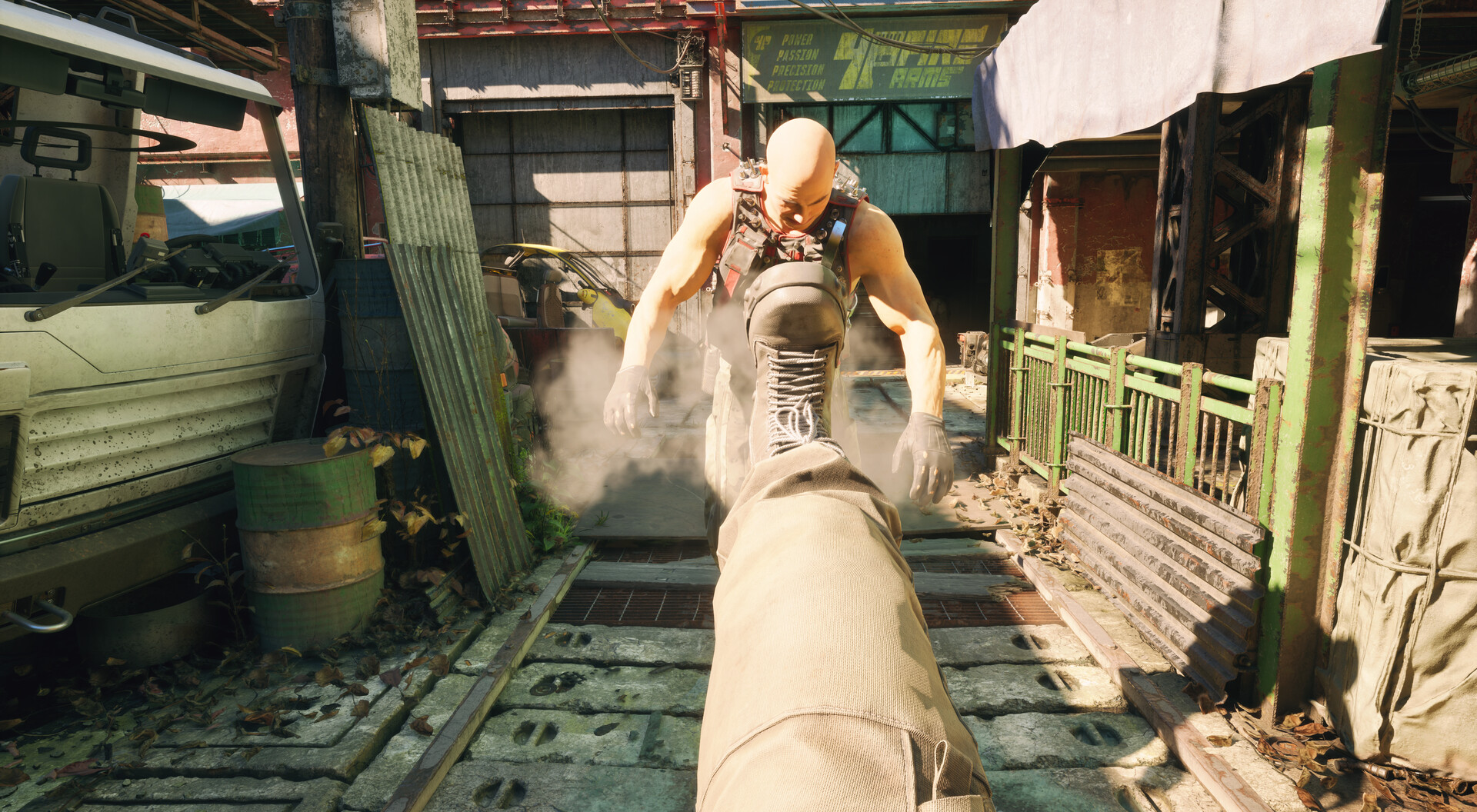
The city is a reactive environment. NPCs and factions remember what the player has done, and the consequences of past decisions ripple forward through the playthrough. Alliances shift based on player behavior, and Port Desire's power dynamics evolve in response to how Grey Harker operates within it.
Port Desire is designed with distinct areas that support different playstyles and approaches:
Vertically stacked slums with tight alleys reward patient, stealthy play and careful planning.
Open thoroughfares and residential courtyards enable large firefights that can spill into the streets.
Luxurious interior locations are layered with ventilation systems, service corridors, and hackable security networks.
Rooftop gardens and elevated pathways support vertical movement and traversal above street level.
Port Desire is handcrafted block by block rather than generated at scale, and its texture reflects that. There are very few straight streets, layers of pipes and air-conditioning units stacked across the buildings, and greenery woven through the concrete. The city is also built to be read vertically. Players can look up and climb, and the space is filled with shortcuts, hidden corners, and rooftop routes that exist for reasons beyond any single mission objective.
A developer diary focused on building Port Desire frames it as a city that does not belong to anyone, yet one where everyone wants a piece. The team showcased how the city comes alive through three combined layers: dynamic lighting that shifts the mood of the neon streets, dense crowds of inhabitants moving through markets and apartments, and systemic destruction that lets the environment break apart and react under fire. Working together, these systems are meant to produce a world that changes around the player's actions instead of staying fixed, reinforcing that the port is built to respond to how each situation unfolds.
A later studio breakdown detailed the technology behind this density. Port Desire is populated with more than 3,000 dynamic inhabitants, generated through Unreal Engine 5's Mass Framework crowd system paired with MetaHuman character technology so that each citizen looks and behaves distinctly. Nanite geometry fills the streets, interiors, and architecture with fine visual detail while holding performance steady, and the lighting that shapes both visibility and enemy behavior runs on Lumen and MegaLights, with hundreds of dynamic light sources active across the city at once. The studio frames this approach as density over scale: prioritizing detail, reactivity, and gameplay possibility in every street and interior rather than maximizing raw map size.
That same lighting technology drives a dynamic weather system, so conditions across the city change in real time. Because light governs both what the player can see and how enemies react, weather and the shift from day to night become part of how each situation plays out.
The city functions as more than a backdrop. Port Desire's environment directly supports the Gameplay systems, with enemy AI that responds to sounds, sightlines, and pressure within each district. Every inch of the city is described by the developers as alive and waiting to be shaped by the player's choices.
Official press materials have begun putting names to the city's population. Very little has been said about any of them beyond their existence, so the entries below record what the studio has published rather than any confirmed role in the story.
Name | What has been shown |
|---|---|
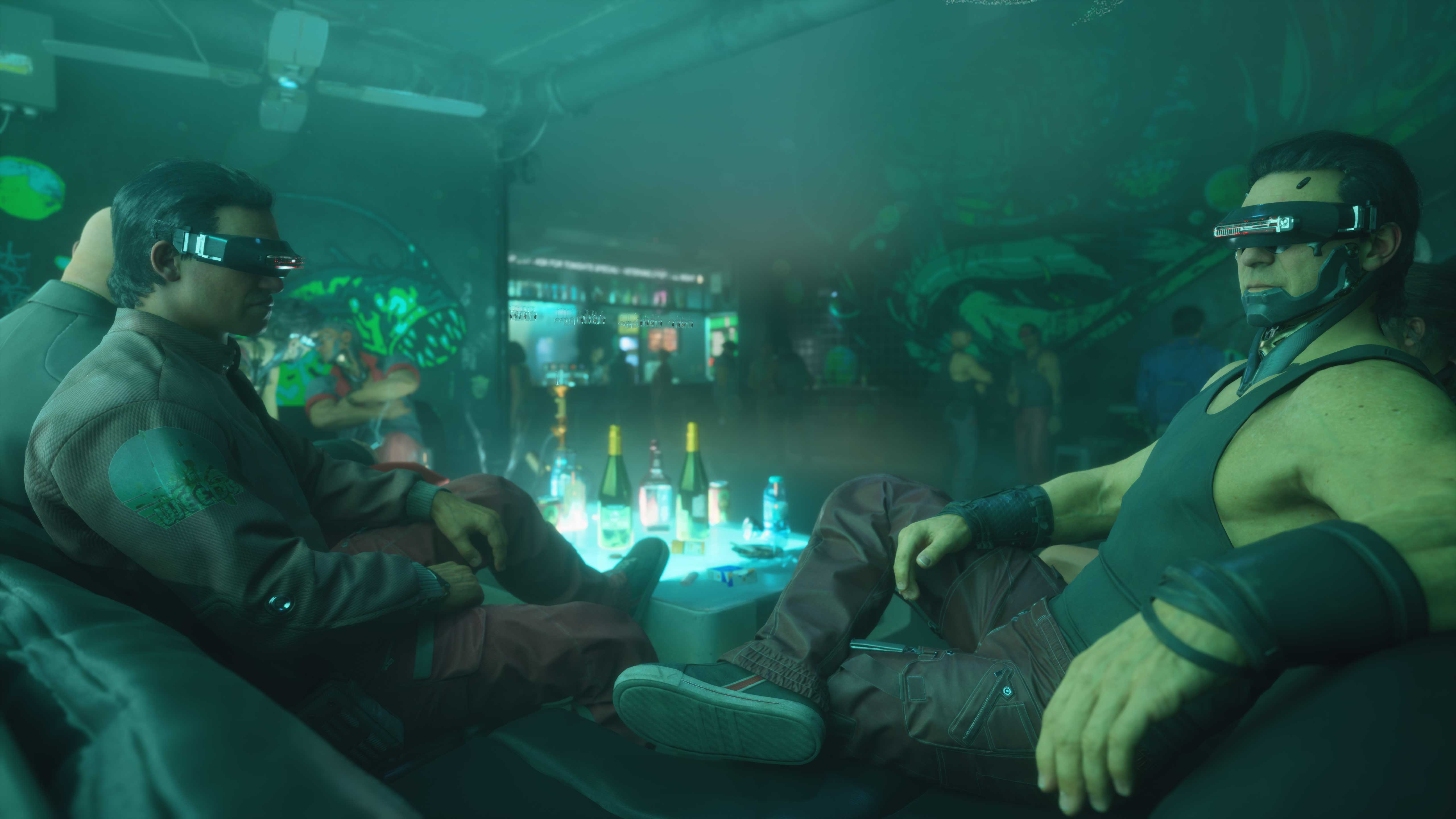
Fishbone Gang | A gang with its own bar in the city. An official still shows two members in a green-lit lounge under painted fish murals, wearing the visor-style eyewear that recurs across the city's street population. |
Peacekeepers | Figures in heavy blue and grey powered armour, shown on patrol in a narrow alley. They read as an armed enforcement presence rather than a civil police force, which fits a city described as having no law of its own. |
The Landlord | An older man in glasses with a shoulder rig, photographed in a sunlit market. Named in official press stills; his part in the story has not been described. |
Brill | A name attached to an official still of a green-lit lounge, where three figures sit around a table of bottles and a hookah. Nothing further has been published. |
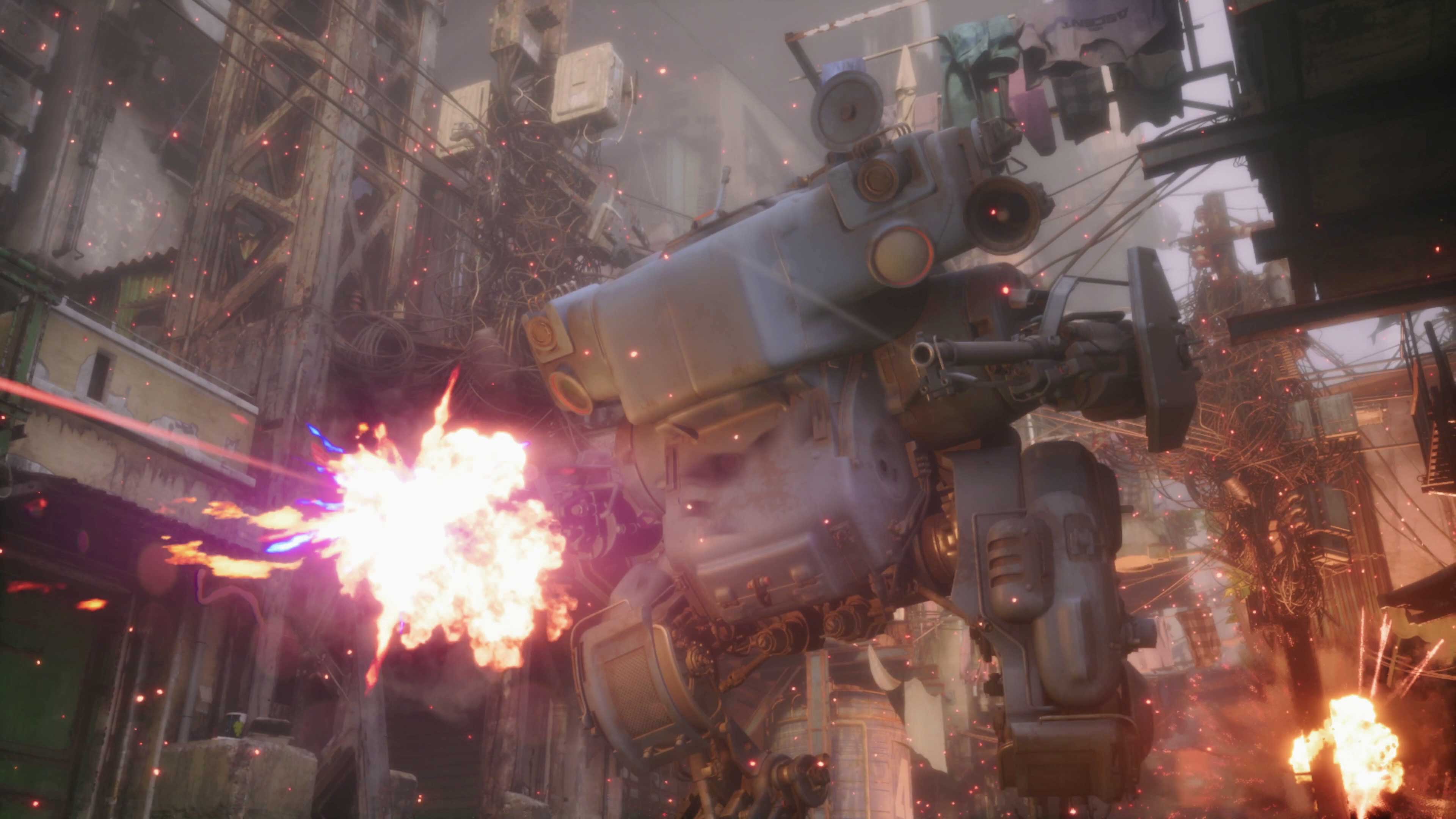
Walking mechs are also part of the city. An official still shows a bipedal machine opening fire down a cable-strewn alley, throwing enough light to pick out the buildings on either side, which places heavy machinery among the threats the city can put in front of a player on foot.
The slums are the one district named so far in official material. Stills of the area show narrow alleys thick with steam and smoke, laundry lines and cabling strung overhead, shuttered frontages, and figures with glowing cybernetic eyes moving through the dark. It matches the vertically stacked, patience-rewarding area type the studio has described, and it is the part of the city shown most often.
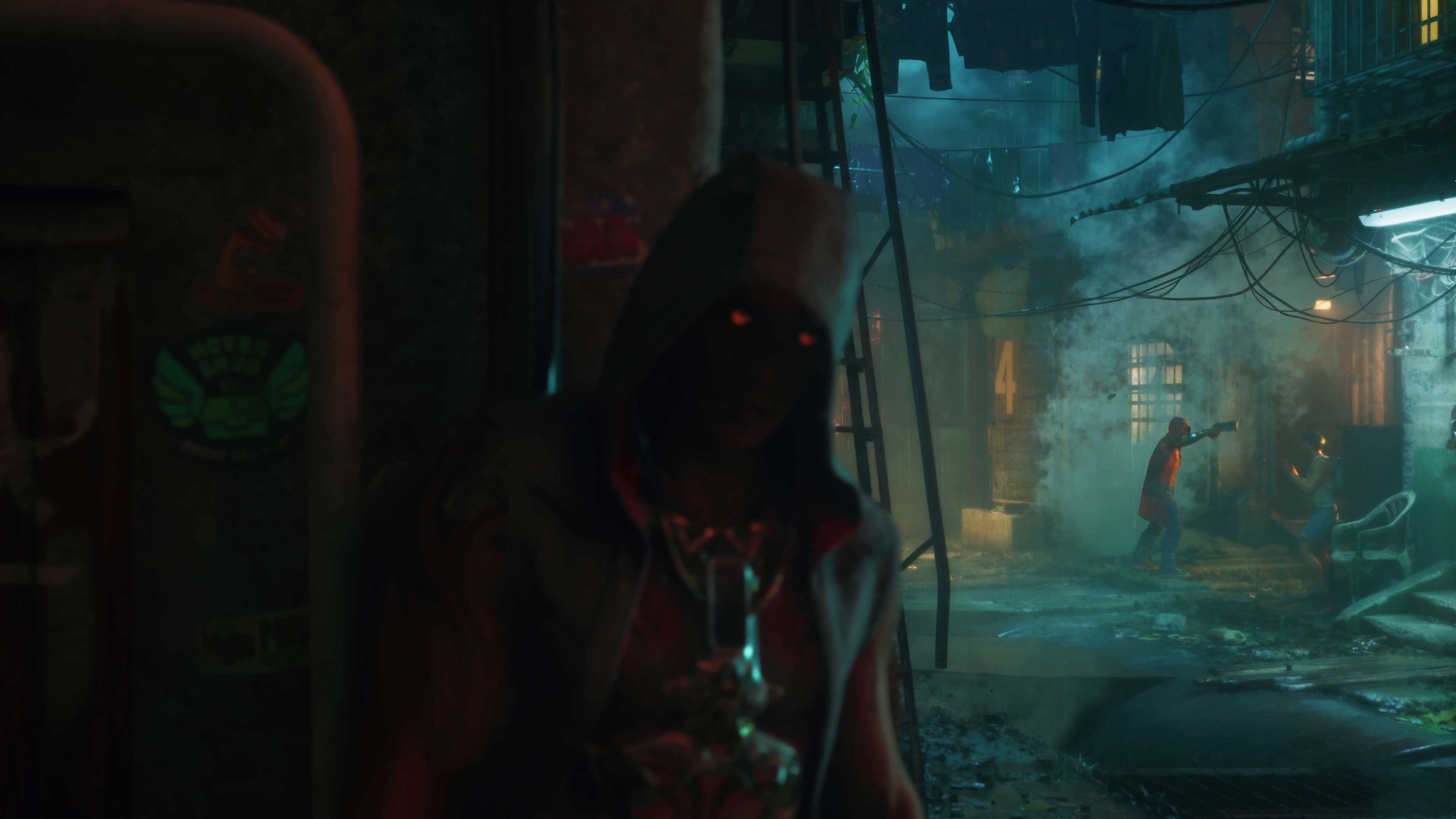
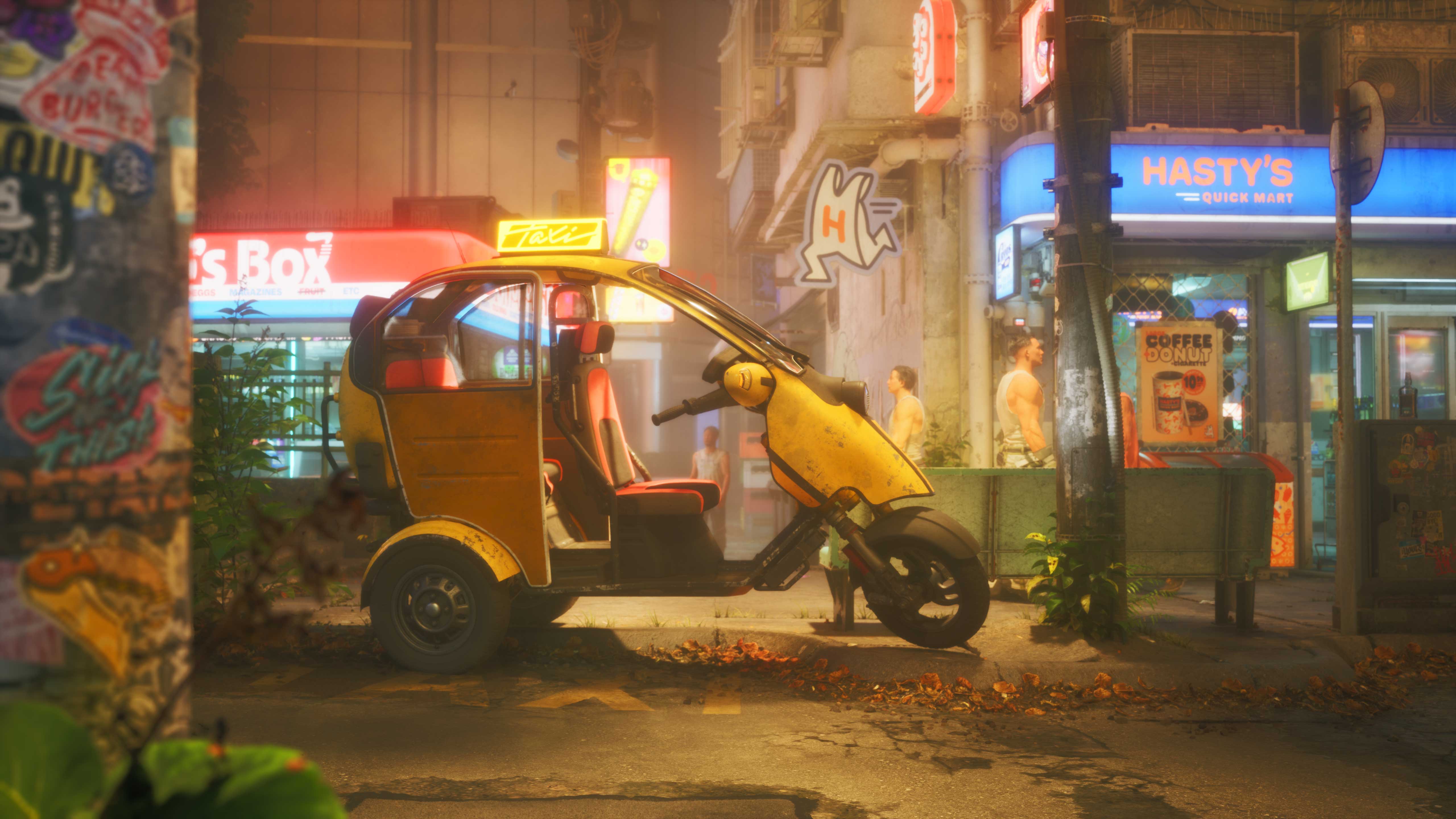
The studio has said it spends considerable time on the textures, in-universe brands, and environmental storytelling that fill the city, and the published stills bear that out. Street-level shots show invented convenience-store chains, fast-food boards, drink brands, coffee and doughnut advertising, and layers of stickers and graffiti, alongside three-wheeled taxis parked at the kerb. None of it is signposted as a collectible or a system; it is set dressing meant to make a block feel occupied.