

Overview
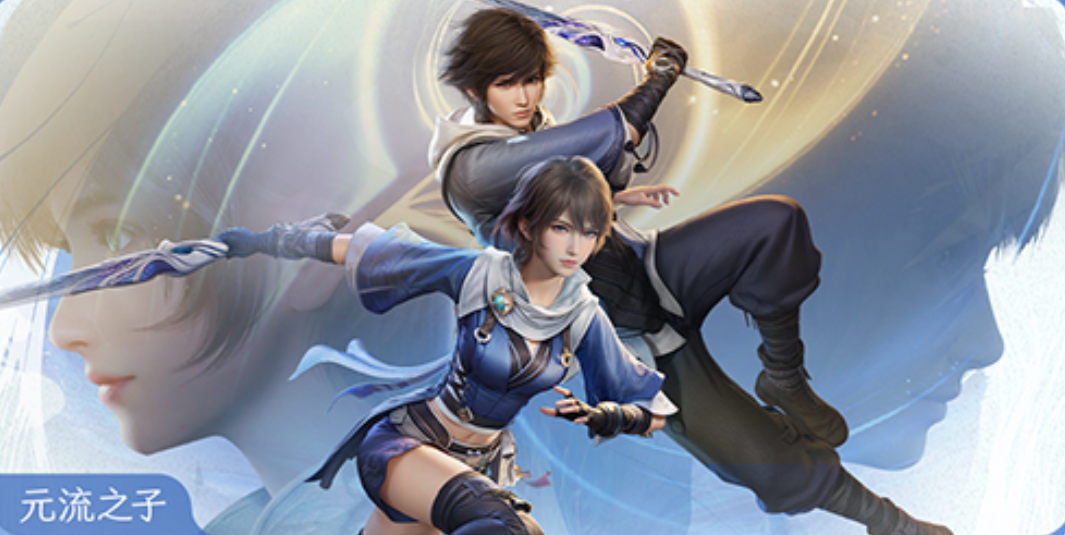
Heroes in Honor of Kings: World are not separate playable characters in the Genshin Impact sense. Instead, they are Resonances (共鸣) that the player protagonist, the Child of the Primal Flow, can equip and channel through the Flow system. The player controls a single character but can equip two Resonances at once via the Dual-Class System and swap between them in real time with no animation lock. At the S0 Season launch on April 10, 2026, Honor of Kings: World shipped with 11 playable Resonances confirmed by current community data. S0 landing page.
The S0 Launch Roster (11 Resonances)
Resonance | Chinese | Role | Identity |
|---|---|---|---|
元流之子 | Versatile | Player protagonist, four-weapon cycle: ring blade, lance, hammer, sword | |
东方曜 | 强攻 Offensive | Jixia Academy member, sword-based dash combat, markers can be released mid-air | |
西施 | 辅助 Support | Jixia Academy member, damage amplification and healing | |
蒙犽 | 强攻 Offensive | Jixia Academy member, artillery and ranged firepower | |
鲁班大师 | 辅助 Support | Jixia Academy member, mechanical summons and pull | |
孙膑 | 辅助 Support | Jixia Academy member, time-slowing support with allied ultimate charging | |
王昭君 | 强攻 Offensive | Ice and snow sorcery, Han princess sent to the Wolf Banner tribe | |
伽罗 | 强攻 Offensive | Bow user, Guardian of the Thousand Caves and scribe of civilization | |
花木兰 | 对抗 Confrontation | Leader of the Great Wall Guard Army, dual-form greatsword mechanic | |
铠 | 对抗 Confrontation | Demon Armor inheritor, Great Wall Guard Army, parry-focused combat | |
冷春 | 强攻 Offensive | S0 original hero, Jixia school physician, dual-form 魔刹 (Mo Sha) switching |
S1 Roster Expansion (May 29, 2026)
The S1 World Beginning Season extends the playable Resonance roster with three new arrivals across the season's two sub-versions. All three are now live: Sun Shangxiang and Longya arrived with the season opener, and Fei Han followed on July 23, 2026 as the game's first battle-pass Resonance.
Resonance | Chinese | S1 Window | Pre-Show Identity |
|---|---|---|---|
孙尚香 | First-half (May 29) | Scorching Flow (灼流) with two launch loadouts: Strong Attack and Support | |
龙牙 | First-half (May 29) | Hammer-wielding 铸云庐 sect blacksmith, Scorching Flow Support, aggressive playstyle | |
妃寒 | July 23, 2026 | Offensive mage (强攻法师) themed on a rabbit spirit guardian; unlocked through the Battle Pass |
S1 also introduces a genderswap (性转) toggle and a low-level gear stat buff, both documented on the S1 World Beginning Season hub.
Leng Chun is the first character in the Honor of Kings franchise created exclusively for Honor of Kings: World. She is not in the MOBA roster and was introduced with the S0 Season launch.
Three Resonance Roles
Honor of Kings: World does not use the Honor of Kings MOBA's lane roles. It classifies Resonances with its own trait role system, which had three roles from launch:
对抗 (Confrontation / Duikang) - Frontline bruiser-tanks who draw enemy attention, absorb damage, and still deal respectable damage. Example: Kai, Mulan.
强攻 (Offensive / Qiangong) - High-burst damage dealers who seek windows of opportunity; can be melee or ranged. Example: Wang Zhaojun, Dongfang Yao, Leng Chun.
辅助 (Support / Fuzhu) - Buffs, group crowd control, healing, and shielding. Example: Sun Bin, Xi Shi, Master Lu Ban.
Position Labels Added on Top of the Trait Roles
An update on August 5, 2026 added a second, finer layer of labelling. Every Resonance now also carries one of five position labels: Warrior, Assassin, Mage, Marksman, and Support. These sit on top of the three trait roles above rather than replacing them, and the three trait roles are still what matchmaking uses when it composes a team. Players pick a preferred position and an optional backup when queueing for group content.
The practical effect is descriptive rather than mechanical: the position label tells other players what a Resonance does in a fight, while the trait role is what the matchmaker balances around. See Party and Matchmaking for how the queue uses them.
Players equip two Resonances at once, typically balancing roles to cover weaknesses. For example, pairing Sun Bin's time-slow Support kit with Wang Zhaojun's Ice Offensive kit lets players freeze boss attacks mid-swing and follow up with burst ice damage. Cross-Resonance synergies are a core combat mechanic, with abilities like Sun Bin's Reverse Flow Time (逆流之时) directly charging allied Resonance ultimates.
Combat Structure
Each Resonance has the following standard kit structure:
A basic attack string with a unique weapon and combat rhythm
Three active skills on short cooldowns
One evasion or dodge ability
One ultimate ability
A unique passive tied to the hero's combat identity
Each equipped Resonance has its own separate health pool, so a player with two Resonances equipped has effectively double survivability: when one Resonance's HP runs low, switching to the other gives a fresh health bar. Cooldowns are shared across style swaps, which prevents simple ability rotation spam.
Talents and Progression
Each Resonance has its own Talents (天赋) that modify move properties or add new moves. Talents are earned through Resonance progression, not purchased. For example, an activated Talent for the Child of the Primal Flow can extend their basic attack string with an additional appended skill. Players build their Resonance identity through the combination of base kit plus selected Talents, which creates meaningfully different builds even for the same Resonance.
Unlocking Heroes
Resonances are unlocked through gameplay. There is no character gacha in Honor of Kings: World. Some Resonances are unlocked through story progression at Jixia Academy, others through side quests and events, and the S0 original hero Leng Chun unlocks during specific academy questlines. All 11 S0 launch Resonances are fully earnable without spending money.
Other Heroes Shown in Trailers and Demos
Several additional Honor of Kings heroes have been shown in Honor of Kings: World trailers, hands-on demos, and official marketing over the years of pre-launch coverage, even though they are not in the S0 launch 11. These include (but are not limited to) Li Bai, Yang Jian, Zhuangzi, Jiang Ziya, Da Qiao, Xiao Qiao, Ling, Zhou Yu, Hou Yi, and others. Their status as confirmed future Resonances has not been formally announced by TiMi. The Honor of Kings: World wiki hosts individual pages for many of these heroes as reference; readers should understand that appearance in a trailer or demo does not guarantee S0 launch availability.
Tips for Early Players
Start with the Child of the Primal Flow's innate four-weapon cycle; the hammer is ideal for posture-breaking bosses, the sword is the balanced all-rounder
Pair a Confrontation Resonance (Kai or Mulan) with an Offensive Resonance (Wang Zhaojun, Leng Chun) to cover both tanking and damage roles
Sun Bin's time-slow synergizes with Offensive Resonances whose ultimates need setup time
Invest Talents early; a well-tuned Resonance outperforms a vanilla one with better raw gear
Remember that each Resonance has its own HP pool; swap to the fresh one when your current Resonance takes heavy damage
Three Role Classifications Explained
Every playable character in Honor of Kings: World slots into one of three combat role classifications, and the active duo you bring into a fight should be read through that lens. The three roles are Assault (the DPS role, used to burst down broken targets)Support (used to heal, buff, and debuff), and Vanguard (the tank role, used to absorb hits and chip down enemy posture). Role identity is expressed through gear, relics, and talent choices rather than being hard-locked to the character, so the same hero can be built in very different directions if you want to change how they fit a party.
These classifications tie directly into the combat system, the parry system, and the posture break system, because Vanguards are the characters most equipped to stagger enemies into a broken state while Assaults are the ones that cash in on the short damage window that break opens up.
The Two-Hero Party Cap
Your party has two active hero slots, not four. You walk around the world and into combat with a pair of heroes, and you tag between them on the fly. This is why role coverage matters so much: a two-hero party has to cover every job you need it to cover, which leaves very little margin for dead weight. You cannot park a tank in the back and forget about them, and you cannot stack three damage dealers and hope the fourth slot covers survival. Every choice counts double.
Because the active roster is so small, many players pair hero choice with the Resonance System, which lets one hero save two configured builds and toggle between them mid-fight. A single hero can functionally fill two roles across a single encounter, which is the main reason the two-slot party does not feel cramped in practice.
Early Meta: One Assault Plus One Vanguard
At low World Level the prevailing pair is one Assault and one Vanguard. The reason is rhythm. Your Vanguard opens the fight, eats the enemy's opening moves, and chips at posture through blocks and parries. Once the enemy breaks, you tag to your Assault and dump damage into the broken window. This loop is tight, readable, and survivable for new players because the Vanguard always has a safe job to do while the Assault always has a clear signal for when to swing. See the parry system and the posture break system for the break-and-burst mechanics this pair leans on.
Support characters are powerful but they shine later. They come online in mid and late game when party fights get longer, boss scripts get denser, and sustained healing plus buff uptime start mattering more than raw burst. Early in the World Level System progression, most players treat Support as a build option they unlock for their existing hero rather than a dedicated roster slot.
Focus One or Two Heroes Early
The game gently pushes you toward a tight roster because of stamina (vitality) gating on talent leveling and weekly entry caps on dungeon content. Talent materials consume vitality to level, and you only have so much vitality per day, so spreading investment thin across five or six heroes leaves all of them underpowered. Picking one or two mains and pouring your weekly vitality into their talents keeps them strong enough to clear current content while you pick up other heroes for their stories and collection value.
Rotation planning. Decide early whether your main pair is Assault plus Vanguard or one hero wearing two builds across a single fight.
Weekly cadence. Run your weekly dungeon entries on the heroes you actually want to invest in, not across the whole roster.
Build switching. Use the Resonance build slots so a single invested hero can pivot between support and DPS roles between pulls.
Later pickups. New heroes from side content do not have to be mains; many are fine as secondary picks or roster depth for specific dungeons.
Hero Record and Default Appearances
The launch side-content loop for Heroes does not stop at story unlocks. Hero Record is the permanent record-quest path tied to individual Resonances, and current launch guides treat it as the route for unlocking the default appearance of each hero once the early main-story level gates begin to slow progression.
That means hero progression in the launch build is split across at least three layers: the story unlock that grants the Resonance itselfHero Record for default appearance access, and optional side systems such as Companion Invitations that expand the character's narrative presence.
Companion Invitations and Story Timing
Current walkthrough coverage repeatedly places Companion Invitations between story chapters rather than inside them. Before Chapter 5, Xi Shi and Dongfang Yao are the confirmed available invitations. Later chapters unlock more invitation batches and again recommend clearing them before pushing the next main-story gate.
This matters for planning your roster work. If you want a chapter-focused rush, finish the story unlocks first. If you want deeper character context and cleaner side-progress between level gates, fold Companion Invitations and Hero Record into the downtime between chapters.
S0 Launch Acquisition Methods
Launch-week Chinese coverage spells out the exact acquisition path for each of the 11 S0 Resonances. The system is fully transparent because Honor of Kings: World ships without a character gacha; every Resonance is reachable through gameplay, story progression, the Battle Pass, or a flat shop price.
Resonance | Method | Cost |
|---|---|---|
Free at character creation | 0 (default protagonist) | |
Day-1 beginner-task chain | Free | |
Main story, Jixia Chapter 1 | Free (story unlock) | |
Main story, Jixia Chapter 3 | Free (story unlock) | |
Main story, Jixia Chapter 5 | Free (story unlock) | |
S0 Battle Pass (Tier 68) | 68 CNY (paid pass) or earned via leveling once unlocked | |
Direct shop purchase | 3,980 Jingpo | |
Direct shop purchase | 3,980 Jingpo | |
Direct shop purchase | 3,980 Jingpo | |
Direct shop purchase | 3,980 Jingpo | |
Direct shop purchase (S0 original Resonance) | 3,980 Jingpo |
All five direct-purchase Resonances share the same flat 3,980 Jingpo price; this uniformity is the single most-quoted detail in launch-week explainers. Jingpo can be paid for with real money or accumulated through play, so the shop entries are still reachable on the free track.
No Character Gacha
Honor of Kings: World does not have a character gacha. Tencent's launch communications and post-launch coverage repeatedly highlight the absence of character pulls as a deliberate departure from the gacha-first models in adjacent free-to-play action RPGs. The only pity-style mechanic in the game is Heavenly Reward, which exists for cosmetic Mythic-tier outfits and has no effect on combat balance.
Role Relabeling (August 6, 2026)
The August 6, 2026 update added five job positions on top of the three launch trait roles described above rather than replacing them: Warrior (战士), Assassin (刺客), Mage (法师), Marksman (射手), and Support (辅助). The official announcement is explicit on this point, describing the five labels as built on the basis of the existing Assault, Vanguard and Support system. The two layers answer different questions: the job position describes how a Resonance fights, while the matchmaking position decides what duty it is slotted into when a dungeon party is formed. Matchmaking still works from the three trait roles, prioritising a team that covers Vanguard, Support and Assault. See Party and Matchmaking for the matchmaking details.
The Five Job Positions Defined
The August 6, 2026 announcement gives a working definition for each of the five job positions. These describe combat characteristics, not matchmaking duties.
Job Position | Official description |
|---|---|
Marksman (射手) | Attacks at range and deals a high share of its damage through basic attacks |
Mage (法师) | Attacks at range and deals a high share of its damage through Flow techniques |
Warrior (战士) | Uses confrontation technique to control enemies and counters enemy red-light attacks more strongly |
Assassin (刺客) | Fights at close quarters, trading technique for damage, with lethal combo potential |
Support (辅助) | Raises the combat ability of other Resonances while keeping its own output balanced |
The announcement pairs these with an explicit disambiguation: job positions are shown to describe a Resonance's combat characteristics, while matchmaking positions govern role assignment when grouping for instanced content. The two are related but not equivalent, so a Resonance's job label does not by itself determine which slot it fills in a party finder.
Roster Growth Since Launch
The playable roster has grown since the eleven Resonances available at the S0 launch on April 10, 2026. As of August 2026 the official Resonance database lists fourteen entries. The three added after launch are:
Resonance | Chinese name |
|---|---|
妃寒 | |
孙尚香 | |
龙牙 |
Statements elsewhere on this wiki that describe an eleven-Resonance roster are describing the launch line-up specifically and remain accurate for that date. For the current playable count, fourteen is the figure to use. No new Resonance was added between the middle of July and the end of August 2026: the official roster database was unchanged across that window.
September 3, 2026 Balance Pass
The September 3, 2026 update carried the largest balance pass since launch, touching nine Resonances across all three trait roles. It was previewed in an August 28, 2026 developer note that set out the reasoning role by role: Confrontation Resonances were seen as limited in some extreme encounters, Offensive Resonances as inconsistent between scenarios, and Support Resonances as stable overall but uneven against each other.
Resonance | Role | Change Type |
|---|---|---|
Confrontation | Parry buff duration extended from 15 to 20 seconds | |
Confrontation | Two Ningwu entries buffed in damage, duration and critical rate | |
Confrontation | Mo Sha basic attack coefficients raised | |
Offensive | Cheaper dash recast, reworked critical bonus | |
Offensive | Shunhua Barrage damage raised, new passive access | |
Support | Healing per orb raised, mismatched entry fixed | |
Support | Damage amplification raised from 60% to 70% | |
Offensive | Bug fixes to ultimate firing rate and ranked freeze duration | |
Offensive | Fix for the wingman drone failing to fire in group play |
Per-Resonance before and after values are on each Resonance's own page. The team said it would keep watching combat data after the pass and did not present the changes as final.
The roster itself did not change in this update. The official Resonance database still listed 14 Resonances on September 7, 2026, unchanged since Fei Han joined on July 23, 2026.