
Melee weapons in ILL are built from ordinary real-world objects and are designed to break. Team Clout explained its approach in its second dev diary, Melee Weapons From the Ground Up, published on Steam on December 11, 2025. The studio describes starting with everyday objects, breaking them down, sometimes literally, and rebuilding them into weapons that feel heavy, dangerous and grounded in the world.
Starting from a real pipe
The diary's main example is a pipe. During production a team member sent a photo of a grimy vertical pipe in the stairwell of the building where they grew up. The team studied its proportions, the way it attached to the wall, its dents and chipped paint, and modeled it closely for the game. That exact pipe was later replaced with a version that better fits the game's world, but the studio says it served as an anchor: every later decision about the pipe weapon had to answer to whether such a shape would exist, be mounted that way, and plausibly break that way.
Ripping weapons out of the world
Melee weapons are not always waiting on tables and in crates. Sometimes you have to tear them out of the environment. To prototype this, the team built an internal playground level inside the engine with gray blocks, test geometry and rows of pipes bolted to walls. Combat and level designers use it to rip pipes off their mounts, trigger steam bursts and swing the pipes at test enemies. The questions they test there include:
How long it takes to rip a pipe out.
How loud the burst of steam is.
How many hits the pipe can survive.
How it looks and sounds when it finally gives in.
Why weapons break
Breakage is a core principle. The diary describes a typical encounter: you rush into a room with debris and a couple of hostile NPCs, grab a pipe from a wall and crack it across someone's head, and after a few heavy blows it gives out. You then have to scan the room for something else, such as a loose brick on the floor or a broken board leaning against a wall. The studio says this pushes the player to engage with the environment instead of only the inventory, and it supports the story idea that everything around you is already damaged and close to collapse.
Photogrammetry: bricks, boards and crates
To keep melee grounded, Team Clout scans real objects and turns them into game assets. For a brick, the team scanned an intact brick, physically broke it, scanned the fragments and captured the internal surfaces. Those pieces were baked into one texture set and tied into the destruction system, so a brick that shatters in the game breaks into shapes and materials based on real reference.
The same process covers boards, pipes and other props. A scan is often only the starting point: geometry is cleaned up, proportions are adjusted for the first-person view, and materials are reworked until they read clearly in motion. One favorite example is a military-style crate sourced from a private surplus collector, shipped to the team, scanned and turned into a reusable base asset. Even its individual nails and chipped wood fed into the studio's material library.
Making hits feel heavy
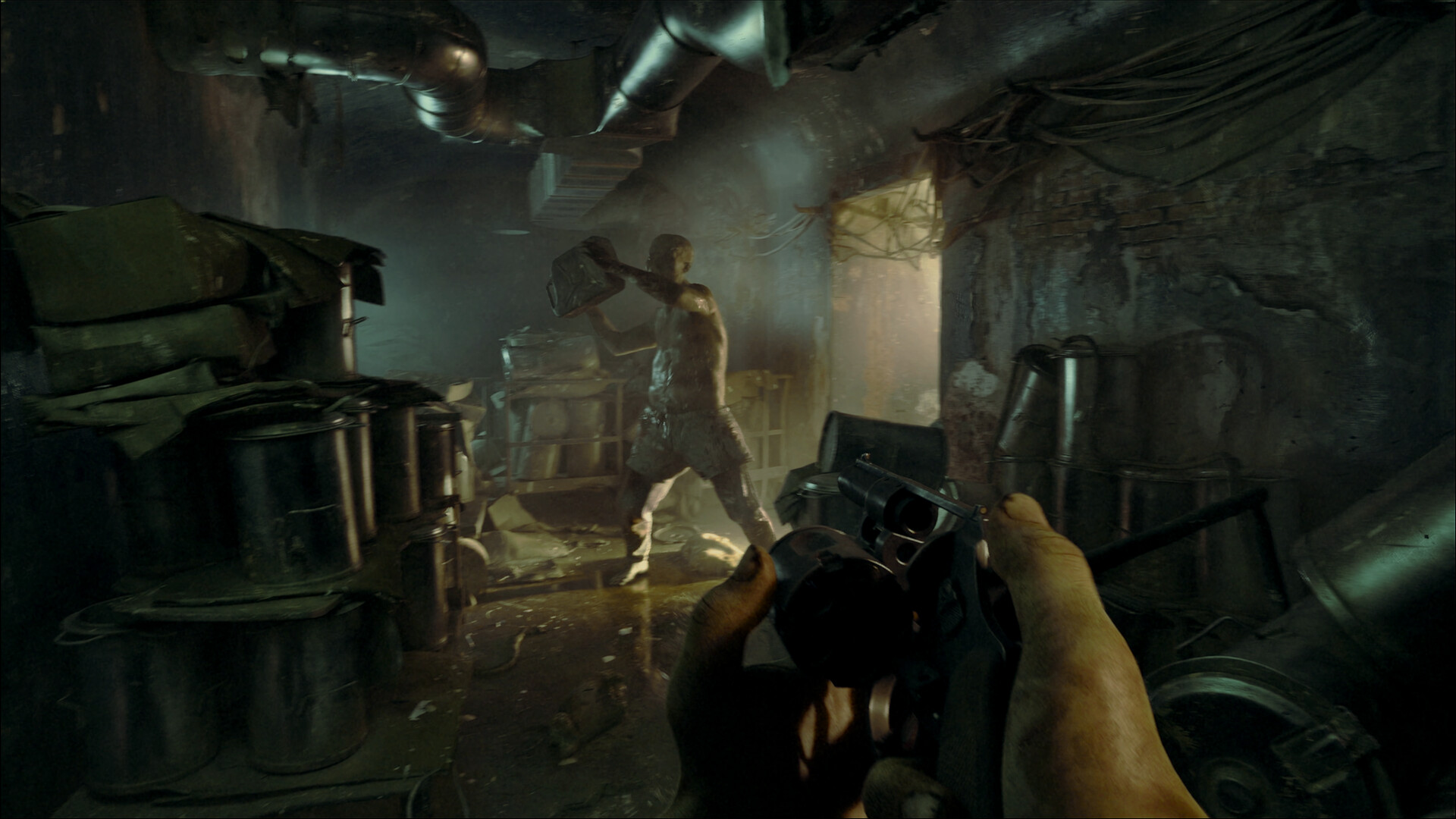
The diary lists three kinds of strike, quick swings, charged hits and heavy blows, and says each triggers different reactions: enemies stagger, lose balance or get knocked down. The team tunes impact response, animation timing, camera movement and the way the weapon rebounds after a hit so that weapons never feel weightless.
Sharp weapons
Blunt improvised weapons are not the only option. The August 2025 FAQ confirms sharp melee weapons that let you tear through monsters in gruesome ways. See Weapons for the full confirmed arsenal and Combat for how melee fits into fights.