
Darkhaven is set in a dark fantasy world in the aftermath of a total collapse of civilization. Every player's world is procedurally generated, and the land does not stay fixed: players dig and build in it, and invading forces scar it. This page covers the setting, how worlds are put together, and the world events confirmed so far. Terrain editing has its own page, Terrain and Building.
Setting
The store description casts the player as a survivor in a world where the wild lands and their monsters have reclaimed the ruins of long-dead empires. Survival means leaving the safety of a modest stronghold to hunt the remnants of evil. The studio's launch material for the Kickstarter Campaign describes the player as one of the last holders of ancient power in this dying land.
As of November 2026, Moon Beast has not published named regions, factions, characters or a main story outline beyond this premise. The demo's quest line and boss names are listed on the Dungeons and Enemies page.
Procedural worlds
Moon Beast says Darkhaven moves away from random layouts made of disconnected corridors and rooms. Instead, the game uses ecological rules to stitch together biomes, handcrafted points of interest and terrain so that the result makes sense as a place. The goal is a world that is unique to each player yet hangs together, with an implied history in its ruins. The studio frames exploration as discovery of the world rather than a path between groups of monsters.
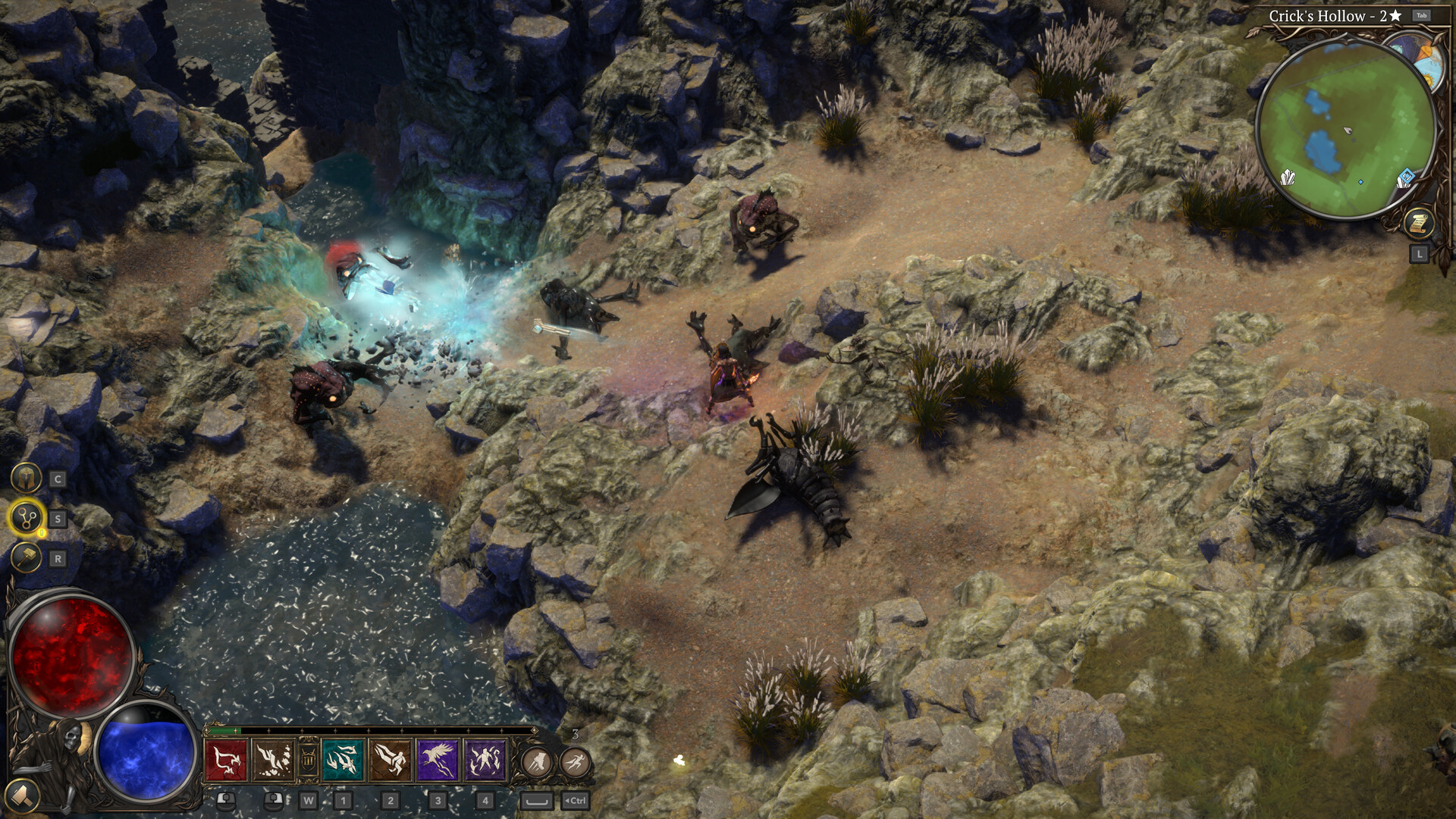
The demo's patch notes refer to sectors of the world, and some content was placed differently in each world: for example, the Endless Lair appeared in a random sector after Narlathak was killed. Crypts could randomly be foggy or clear after the February 22 patch. From March 17, new worlds were given a randomly generated name by default.
Seasons and weather
The reveal material says seasons and weather are part of the world and affect both combat and travel. The studio has not detailed specific seasonal effects as of November 2026.
Lurking horrors and world events
Malevolent forces prey on what is left of the realm. In the store description, tendrils of darkness push through the veil from other planes and tear open rifts in reality. Each breach spawns hordes of monsters and spreads corruption that physically transforms the landscape. Players can fight back and rebuild, but the craters, ruins and structural changes left by these incursions remain as a record of the battles.
The Pre-Alpha Demo included one major world event that could be triggered through the main quest line. Once started, it transformed the world progressively and without end until the player stopped it, and players could hold off on triggering it until they were ready. Patch notes refer to the Necropolis, which has its own quest line and grows over time; its growth was slowed on the lower difficulties in the February 22 patch. From March 17, waystones in the Necropolis were buried when taken over by shadow and could be dug back up to reactivate them.
A world that remembers
A recurring point in the studio's descriptions is persistence. Online worlds keep their state when players are offline, and dungeons, battlefields and landmarks keep the changes players make for anyone who explores them later. In the demo this was not yet in place: server reboots reset world shards, and the studio said persistent world-state saves were planned but not implemented. See Multiplayer and Realms for how persistent worlds are meant to work.
World feature | Status |
|---|---|
Procedurally generated worlds | Confirmed; present in the demo |
Ecological rules for biomes and points of interest | Confirmed by the studio |
Rifts, invasions and corruption that reshape terrain | Confirmed by the studio |
Major world event via the main quest | Present in the demo |
Seasons and weather | Announced; details not published as of November 2026 |
Persistent world state online | Planned; not in the demo |